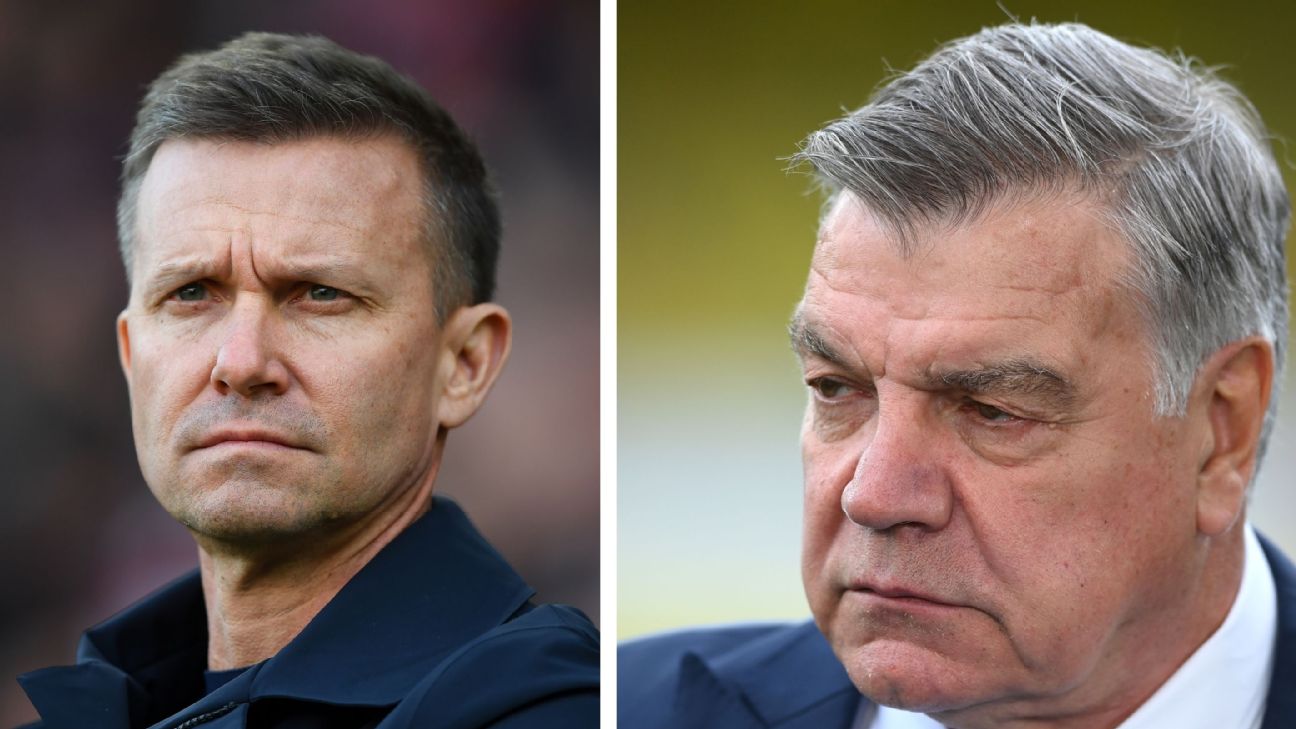
Jesse Marsch has responded to criticism of his time in charge of Leeds United from fellow former manager Sam Allardyce, adding a new chapter to the ongoing debate over the club’s relegation from the Premier League.
Marsch and Allardyce both had brief and turbulent spells at Elland Road during the 2022-23 season, a campaign that ended with Leeds dropping out of the top flight. Marsch began the season as head coach, having kept the club up in dramatic fashion on the final day of the previous campaign, while Allardyce was appointed late in the season in a last attempt to avoid relegation.
In recent comments, Allardyce criticised aspects of Leeds’ situation prior to his arrival, including decisions made before he took charge. He referenced the condition of the squad and implied that previous management choices had left the team in a difficult position. Those remarks were widely viewed as a reflection on Marsch’s tenure, prompting the American coach to respond.
Marsch has defended his work at the club, pointing to the context in which he operated and the challenges Leeds faced throughout his time in charge. He has argued that a combination of factors contributed to the team’s struggles, including injuries, the transition from the playing style of his predecessor and the intensity of the relegation battle. He has also indicated that it is too simplistic to place the blame for relegation on any single manager.
The exchange between the two former Leeds managers underlines the continued scrutiny surrounding the club’s recent past. Leeds underwent multiple managerial changes in a short span of time, and each coach has since offered a different perspective on why the team was unable to secure its Premier League status.
Marsch’s latest comments highlight his belief that the relegation should be viewed as the outcome of a complex set of circumstances involving recruitment, injuries, and changes in leadership, rather than being attributed solely to one period of management. Allardyce, for his part, has maintained that the situation he inherited was extremely challenging.
While both men have since moved on from their roles at Elland Road, their contrasting views continue to shape the discussion among supporters and observers about where responsibility lies for Leeds’ drop into the second tier, and how the club’s difficult season should be remembered.