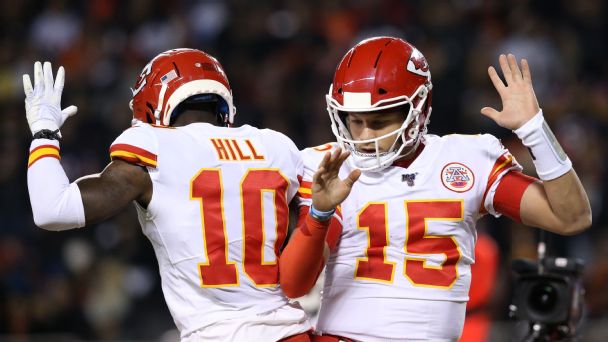
Tyreek Hill’s potential reunion with the Kansas City Chiefs naturally raises questions about timing, fit, and long-term value for both sides. Hill, who will turn 32 on March 1, is entering the stage of his career when teams carefully evaluate how a veteran’s skill set and experience align with their roster needs and financial structure. For the Chiefs, any conversation about bringing Hill back would begin with his history in Kansas City and the current state of their offense.
Hill was one of the league’s most explosive wide receivers during his first stint with the Chiefs, developing a rare on-field chemistry with quarterback Patrick Mahomes. In their time together, the offense regularly showcased a vertical passing attack built on Hill’s speed and ability to stress defenses at every level. That connection forced opponents to devote extra coverage to Hill, opening opportunities for other receivers and tight end Travis Kelce underneath and across the middle.
Since Hill’s departure, Kansas City has adjusted its offensive approach. The Chiefs have leaned more on intermediate passing concepts, varied personnel groupings, and methodical drives rather than relying as heavily on deep passes. While this evolution has kept the offense effective, there have been stretches where a true game-breaking perimeter threat appeared to be missing, especially against tight, physical coverages. A player with Hill’s track record of separating downfield and creating yards after the catch could restore some of the vertical element that once defined the unit.
The presence of Eric Bieniemy in any potential reunion scenario adds another layer. Bieniemy, who previously served as offensive coordinator during several of the Chiefs’ most productive seasons, is familiar with Hill’s strengths, preferred route concepts, and how to position him in motion and formation variations to create favorable matchups. That shared background would reduce any transition time, as Hill already knows much of the terminology, timing, and expectations associated with a Bieniemy-influenced scheme.
From Hill’s perspective, returning to an offense led by Mahomes could offer stability and clarity in role. Mahomes’ ability to extend plays and throw accurately from multiple platforms pairs naturally with Hill’s improvisational skills. When plays break down, Hill’s speed and change of direction have historically turned broken structures into big gains. For a veteran receiver, operating with a quarterback who anticipates his movements and trusts his decision-making can extend productivity and reduce the need to win solely with raw speed on every snap.
Age is an important consideration, but many receivers have remained effective into their early and mid-30s by refining route running, leveraging experience against coverages, and adjusting their training. Hill’s game has always centered on elite quickness and acceleration, yet he has also developed more nuance as a route runner over time. A coaching staff that already understands how to manage his workload, alignments, and usage patterns could help maximize the remaining prime of his career while limiting unnecessary wear.
For the Chiefs, any reunion would also be about locker-room familiarity and communication. Hill has worked with key leaders on offense and understands the expectations set by the coaching staff. Continuity can be valuable for a team regularly contending deep into the postseason, where small advantages in timing, trust, and situational awareness often decide games. Integrating a new receiver who already knows the system and the quarterback’s preferences may be simpler than onboarding an entirely unfamiliar player.
There would still be questions to answer: how Hill’s current physical profile compares to his earlier years in Kansas City, how his role would be defined alongside existing pass catchers, and how a contract structure would reflect both his past production and future projections. Those factors would shape whether a reunion progresses from theoretical fit to actual agreement.
Still, from a purely football standpoint, the idea has clear logic. Hill’s proven chemistry with Mahomes, his familiarity with Bieniemy’s concepts, and the Chiefs’ ongoing search for dynamic perimeter production align in a way that makes a second chapter together at least worth exploring. For a franchise built around an elite quarterback and an adaptable offensive system, bringing back a receiver who once helped define that identity would be a move grounded in shared history, established trust, and a mutual understanding of what it takes to sustain success at the highest level.