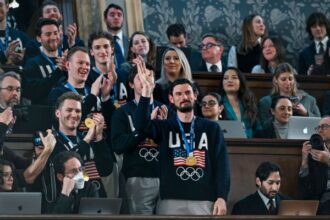
In 2019, Jack Hughes and Alysa Liu each took part in a reflective exercise: writing letters to their future, retired selves. At the time, both were rising teenage stars, praised for their potential but still at the beginning of their journeys in elite competition. Hughes was a highly touted hockey prospect preparing to enter the NHL, while Liu was emerging as one of the United States’ brightest young figure skaters. Their letters captured the uncertainty, ambition and curiosity that define any early career, and they offered messages of hope to the versions of themselves they imagined years down the road.
Those notes have gained new relevance in 2026. Both Hughes and Liu can now add a major milestone to the storylines they once only dared to outline: Olympic gold. The accomplishment changes how those 2019 words read today. What were once aspirations now sit alongside completed goals. Their younger selves wrote from a place of possibility; their current selves can look back having reached the top step of an Olympic podium.
In revisiting the letters, certain themes stand out. Each athlete focused on long-term growth more than specific statistics or medals, describing a desire to keep improving, to handle pressure, and to represent family and country with pride. They wondered how they would handle setbacks and whether they would still love their sport after years of training and competition. They also wrote about the sacrifices required to compete at the highest level: time away from home, the need for discipline, and the challenge of staying focused while still enjoying life beyond the rink.
Olympic gold does not appear in every sentence of those reflections, but it is the backdrop against which readers now interpret them. When Hughes and Liu asked their future selves if the hard work would be worth it, the 2026 answer arrives more clearly. Reaching an Olympic summit does not erase the doubts that were on the page in 2019, but it adds context. Victories are no longer abstract ideas; they are a lived part of their history.
The letters also highlight how much of an athlete’s story happens away from cameras or crowds. The younger versions of Hughes and Liu wrote about daily routines, early morning practices and the small details of improvement. That perspective still matters in 2026. An Olympic medal ceremony may last only a few minutes, but it rests on years of repetition, coaching guidance and personal resilience.
Now, when Hughes and Liu read their younger words, they do so with an understanding that only time can provide. Some goals turned out exactly as they hoped. Others shifted as circumstances changed. The letters do not serve as strict road maps; they are more like snapshots of who they were at a specific moment in their development. Looking back after Olympic success, they can recognize how ambition, doubt and determination combined to shape their paths.
For fans, revisiting those 2019 messages offers an unusual window into the evolution of two athletes who have now reached an iconic achievement. The letters capture them before their Olympic triumph, when nothing was guaranteed and everything was still ahead. Reading them in 2026 underscores how unpredictable and demanding a climb to the top can be, even for the most talented prospects.
Hughes and Liu’s stories are not finished. Olympic gold is a landmark, not an ending, and their 2019 letters are now part of a larger narrative about what it means to chase excellence from a young age. Seen from the vantage point of 2026, the words they once wrote to their future selves serve as both a reminder of where they started and evidence of how far they have come.