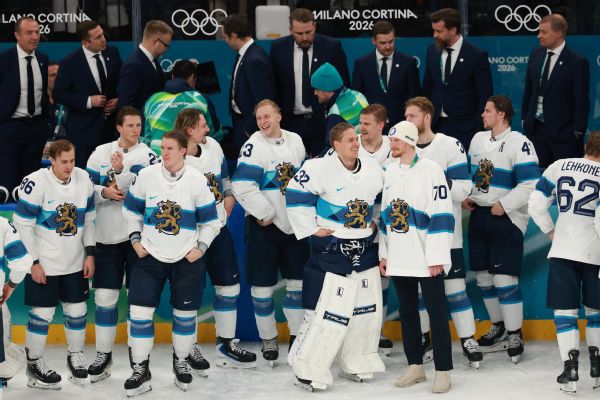
Finland secured the bronze medal in men’s ice hockey at the Milan Cortina Olympic Games with a decisive 6-1 victory over Slovakia, continuing the nation’s consistent success when NHL players participate in the tournament. This result marks the third consecutive Olympic bronze medal for Finland in men’s hockey under those conditions, underscoring the country’s reputation as a reliable contender on the international stage.
From the opening faceoff, Finland established control with disciplined, structured play in all three zones. Their defensive organization limited Slovakia’s time and space, while quick transitions created sustained pressure in the offensive end. Finland’s skaters effectively used their speed and puck support to maintain possession, cycle the puck low in the offensive zone, and generate quality scoring chances.
Finland’s forwards were active on the forecheck, forcing turnovers and disrupting Slovakia’s attempts to exit their own end cleanly. This pressure translated into a territorial advantage and a growing shot differential as the game progressed. The Finnish attack blended patient puck movement with timely drives to the net, resulting in multiple high-danger opportunities from close range and the slot area.
Special teams play was another key factor. Finland’s power play worked the puck efficiently, creating lanes for shots from the point and seams for passes through the middle. On the penalty kill, Finland maintained tight structure, cleared rebounds effectively, and limited Slovakia’s ability to set up sustained pressure or generate second-chance opportunities near the crease.
In goal, Finland received steady, composed play. The Finnish netminder tracked the puck well, controlled rebounds, and provided a calm presence behind the defense. When Slovakia did manage to break through the defensive structure, Finnish goaltending responded with timely saves that prevented momentum swings and kept the Slovak side from mounting a significant push.
Slovakia showed spurts of offensive urgency, particularly when attempting to cut into the deficit, but struggled to consistently penetrate Finland’s defensive layers. When Slovakia did generate zone time, Finnish defenders largely kept shots to the outside and cleared traffic in front of the net to preserve sight lines for their goaltender.
As the game moved into its latter stages, Finland continued to manage the puck responsibly, avoiding unnecessary risks and protecting the lead. Their ability to roll lines, maintain pace, and adhere to their structure helped close out the contest without allowing Slovakia a path back into the game.
The 6-1 final scoreline reflects Finland’s comprehensive performance in all phases: strong five-on-five play, effective special teams, and reliable goaltending. By earning bronze again with NHL players in the lineup, Finland reinforces its standing as one of the most consistent men’s hockey programs on the Olympic stage, adding another medal to an already proud international hockey history.