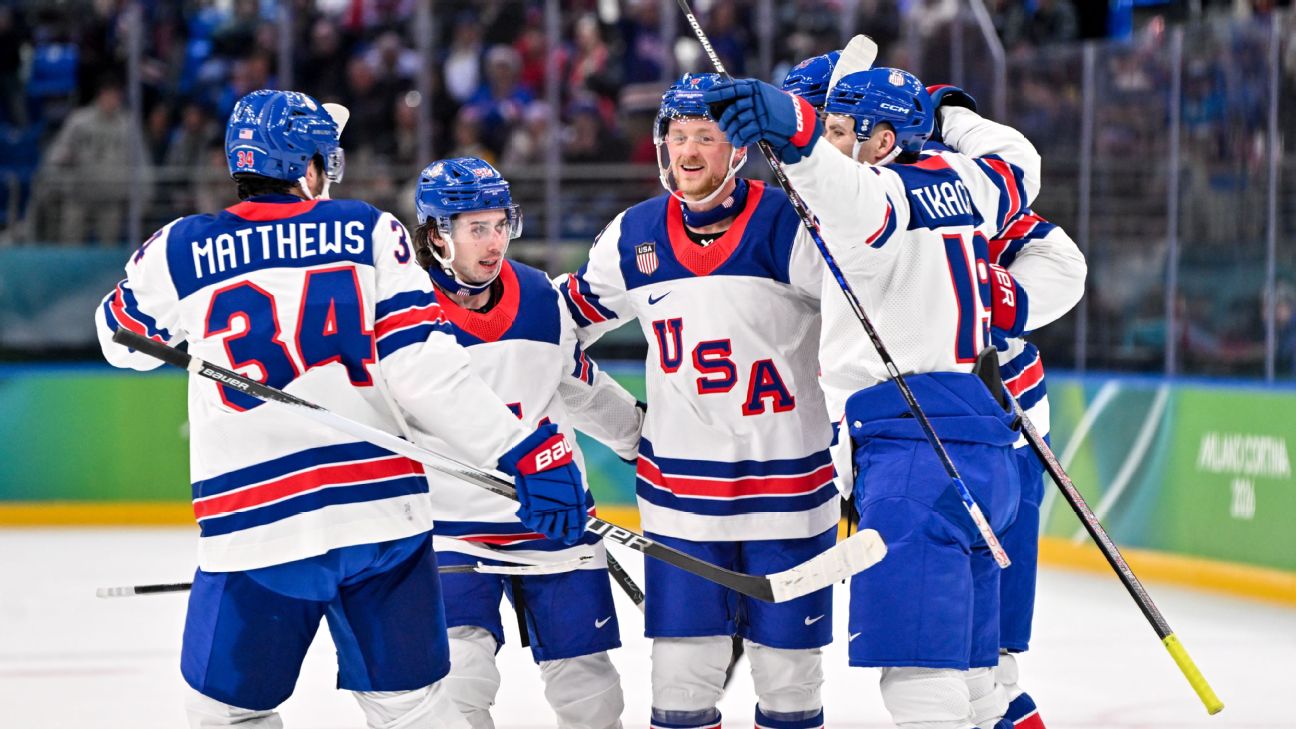
The United States and Canada are set to meet in men’s ice hockey at the 2026 Winter Olympics in Milan-Cortina, renewing one of the sport’s most compelling international rivalries. The matchup, with a gold medal on the line, showcases two of the deepest and most talented national team programs in the world, drawing on star power and experience from across the NHL.
Whenever these two nations meet in best-on-best competition, the game tends to carry meaning beyond the final score. The histories of both programs are filled with memorable Olympic and World Cup clashes, dramatic finishes, and performances that have defined careers. This latest meeting adds a new chapter, bringing together a generation of players raised on those classic moments and now tasked with creating their own.
Both teams arrive with high expectations, built on deep rosters, elite goaltending, and coaching staffs that emphasize structure as much as skill. The United States leans on speed, forechecking pressure, and mobility on the blue line, aiming to turn defense into quick-strike offense. Canada counters with a lineup stacked with playmakers at every position, capable of controlling the puck for long stretches and generating sustained pressure in the offensive zone.
Special teams are expected to be a major factor. Each side features power-play units loaded with top-end shooting and passing talent, while the penalty-kill groups are built around strong skating, active sticks, and disciplined positioning. Staying out of the penalty box, managing line changes, and winning battles on faceoffs will be critical elements as the game unfolds.
The goaltenders, drawn from the NHL’s upper tier, face the dual challenge of handling heavy traffic in front of the net and staying sharp against some of the best shooters in the world. Defensive pairings will be closely watched, as coaches look to find the right matchups against opposing top lines, particularly in potential late-game situations.
As the action develops, momentum swings often hinge on small details: a successful clear, a blocked shot, a contested puck along the boards, or a timely save. Coaches will adjust quickly, shortening benches when necessary and leaning on trusted veterans in key moments. Young players, meanwhile, have an opportunity to make an impact on an international stage that attracts attention from fans across North America and beyond.
This gold medal game reinforces the significance of NHL participation in the Olympics, giving fans a rare chance to see elite players from rival pro teams skating alongside one another in national colors. It also highlights the depth of both countries’ development systems, with many players having progressed through junior, college, and professional ranks to reach this stage.
While the final outcome will be recorded as a single result in the standings, the meeting of the United States and Canada in an Olympic final resonates far more broadly. It represents a showcase of skill, intensity, and national pride that has long defined their competition on the ice, and it provides another high-stakes setting for one of hockey’s most enduring rivalries.