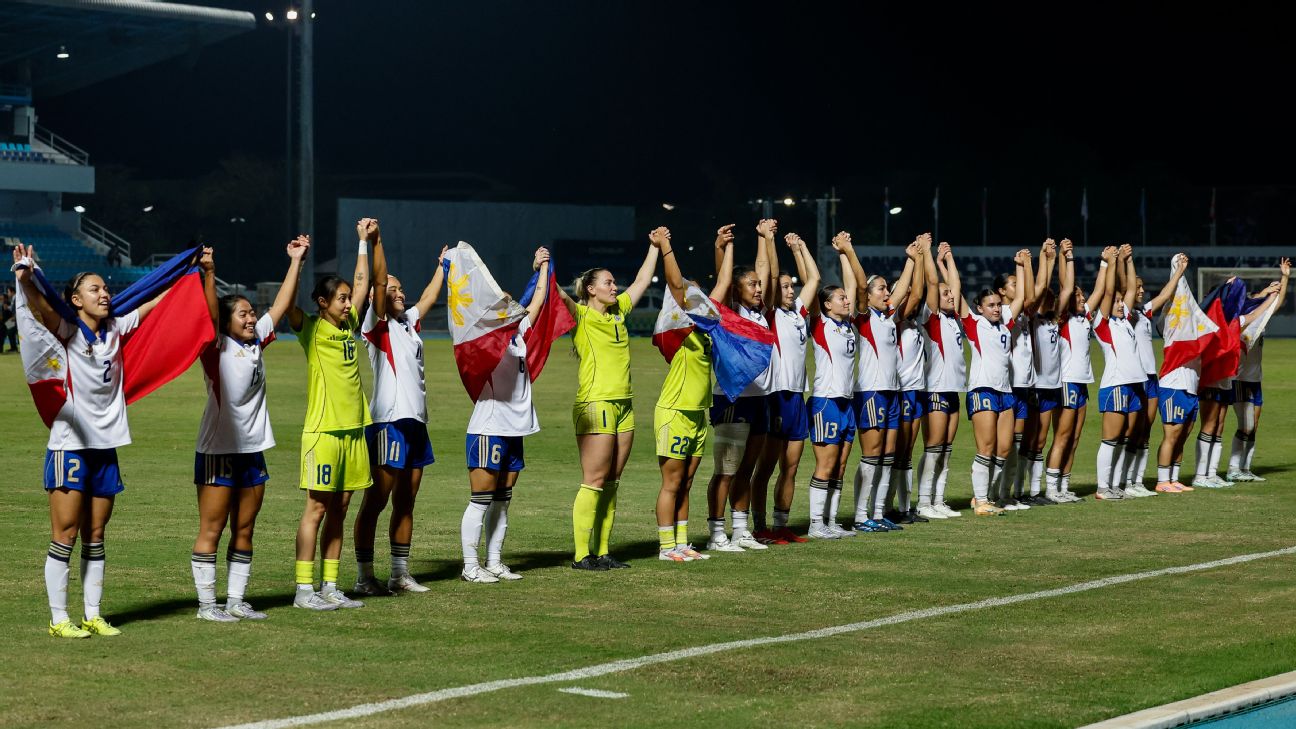
The Philippines women’s national football team head into this year’s Women’s Asian Cup with growing confidence after capturing the gold medal at the Southeast Asian (SEA) Games. That regional triumph has underlined the team’s progress in recent years and strengthened belief that they can compete with some of Asia’s established powers.
Winning the SEA Games title provided tangible proof of development within the program. It showcased improved depth, better organization on the field, and a squad increasingly comfortable in high-pressure situations. Several players gained valuable experience in tightly contested knockout matches, learning how to manage games, protect leads, and respond when opponents applied sustained pressure.
This recent success also reflects wider investment in women’s football in the Philippines, including more structured preparation and a clearer playing identity. The team now approaches major tournaments with a defined style built around collective discipline, hard work off the ball, and quick transitions. That clarity can be a significant advantage at the Asian Cup, where group-stage margins are often slim and small details decide who advances.
The confidence taken from the SEA Games run has influenced the team’s mindset. Players and staff speak openly about respecting every opponent while refusing to be intimidated by reputation. That attitude will be essential in a competition that regularly features some of the world’s strongest women’s national teams. Instead of viewing those matchups as daunting, the Philippines can treat them as opportunities to test their progress and measure themselves against higher-ranked sides.
Another factor working in the Philippines’ favor is familiarity within the squad. Many players have built chemistry over multiple international windows and previous tournaments. This understanding helps in quick decision-making, coordinated pressing, and maintaining structure during long defensive spells. It also contributes to a stronger locker-room culture, where leadership is shared and younger players can lean on more experienced teammates.
At the same time, the team’s coaches can draw on recent tournament experience to guide preparations for the Asian Cup. They have seen which tactical approaches suit the players best, how the side copes with different styles of opponents, and where adjustments are needed. Lessons from both victories and setbacks at the SEA Games can inform training priorities, from set-piece routines to late-game management.
For supporters, the SEA Games gold has raised expectations while also generating excitement. Fans have seen the team deliver on a big stage and now look forward to how the squad will respond to the higher level of competition at the Asian Cup. While the challenge will be greater, the Philippines travel to the tournament with momentum, self-belief, and the realistic ambition of pushing further than in previous editions.
Whether facing regional rivals or traditional continental contenders, the Philippines enter the Women’s Asian Cup with a clear sense of identity and the confidence of recent success. That combination does not guarantee results, but it does ensure that they will approach the tournament with the conviction that they can compete with any opponent they face.