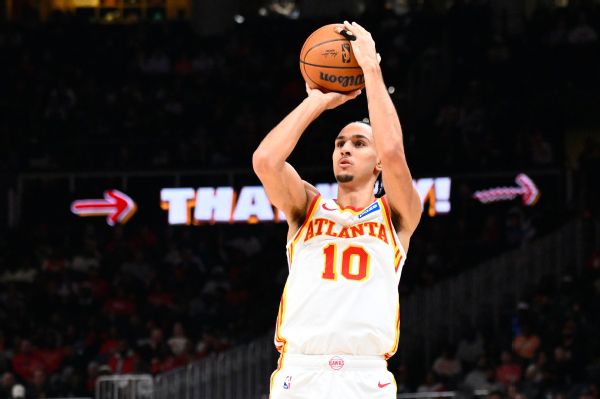
The Atlanta Hawks have altered their starting lineup, moving veteran guard CJ McCollum into the first unit and shifting former No. 1 overall pick Zaccharie Risacher out of the starting five. The change reflects a strategic adjustment by the coaching staff as the team evaluates how best to balance experience and development in the rotation.
Risacher, drafted first overall and regarded as a cornerstone for the franchise’s future, now transitions into a different role after opening the season as a starter. The move does not necessarily signal a long-term demotion, but it does indicate that the Hawks are looking to stabilize their backcourt and offensive structure with McCollum’s presence. Coaches commonly use such adjustments to manage young players’ workloads, tailor matchups, and respond to evolving team needs over the course of a season.
McCollum brings extensive NBA experience and a well-established offensive skill set to the starting group. Known throughout his career as a composed perimeter scorer and reliable ballhandler, he has spent many seasons in prominent roles, including primary or secondary scoring duties and late-game situations. His ability to create shots, handle the ball under pressure, and operate in half-court sets could provide the Hawks with a steadier offensive rhythm to open games.
For Risacher, the shift offers an opportunity to adapt to the league in a slightly different context. Coming off the bench can allow a young player to face varied defensive matchups, focus on specific aspects of development, and contribute in controlled stretches without the immediate demands that often come with a starting assignment. Many high draft picks across the league have experienced similar early-career adjustments before settling into larger roles.
The Hawks’ decision will be closely watched as they continue to shape a roster that mixes veteran leadership with emerging talent. How Risacher responds to his new role and how McCollum integrates with the rest of the starters will be key storylines in the weeks ahead, as Atlanta evaluates what combination best supports both its present competitiveness and its long-term plans.