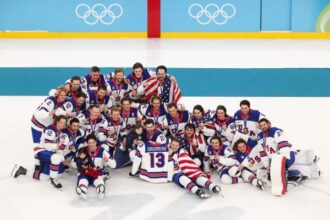
The United States and Sweden are meeting in a highly anticipated men’s hockey quarterfinal at the 2026 Winter Olympics in Milan-Cortina, with a place in the semifinals on the line. This matchup brings together two national teams with deep hockey traditions and strong connections to the NHL, as many of the players on both sides are current or former NHL standouts.
The game is being played under international rules on Olympic ice, which can affect tempo, spacing, and strategy. Both coaching staffs have emphasized disciplined play in the neutral zone and responsible positioning without the puck, knowing that a single mistake can shift momentum in an elimination setting. Special teams are also expected to play a critical role, as power-play and penalty-kill units often decide tight contests in international tournaments.
For the United States, the focus entering the quarterfinal has been on balanced scoring and structured defensive play. The American roster blends experienced veterans with emerging stars, many of whom have been tested in NHL postseason play. The team’s approach stresses quick transitions, strong puck support through the middle of the ice, and an emphasis on generating traffic in front of the opposing goaltender. Goaltending has been a central storyline as well, with the U.S. relying on steady play in net to navigate the preliminary round and earn this opportunity to advance.
Sweden counters with a roster built on puck possession, poise on the blue line, and a long-standing reputation for disciplined, two-way hockey. Swedish defenders are known for moving the puck efficiently out of their own zone, jumping into the rush when opportunities arise, and maintaining tight gaps against opposing forwards. Up front, Sweden typically rolls multiple lines capable of contributing offensively, relying on depth and structure rather than a single scoring line.
Both teams arrived at this stage by playing through the group phase and an early knockout round, sharpening their systems and line combinations along the way. Coaching adjustments are a constant factor in a short tournament, and shifts in line usage or defensive pairings can occur quickly in response to matchups, fatigue, or in-game momentum. Each bench will be closely monitoring faceoff results, defensive-zone coverage, and shot quality, not just total shot volume.
The quarterfinal format is straightforward: the winner advances to the semifinals and remains in contention for a medal, while the losing side is eliminated from the gold-medal race. That reality heightens every shift, blocked shot, and cleared puck, and often leads to conservative decisions in the neutral and defensive zones, particularly in the later stages of the game if the score is close.
Fans following this matchup are watching for key individual performances in addition to the overall result. Standout plays can come from any position, whether it is a critical save from a goaltender, a defenseman breaking up an odd-man rush, or a forward converting a limited scoring chance into the go-ahead goal. Physical play along the boards, net-front battles, and the ability to win loose pucks frequently shape outcomes when teams are evenly matched.
While specific minute-by-minute developments, goal scorers, and final statistics are not detailed here, the broader context is clear: USA vs. Sweden in Olympic men’s hockey is a meeting of two respected hockey nations, both drawing heavily from NHL experience and both fully aware of what is at stake. The quarterfinal setting ensures that every goal and momentum swing carries added significance, and the result will determine which team’s pursuit of an Olympic medal continues into the semifinal round.