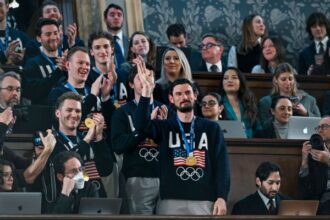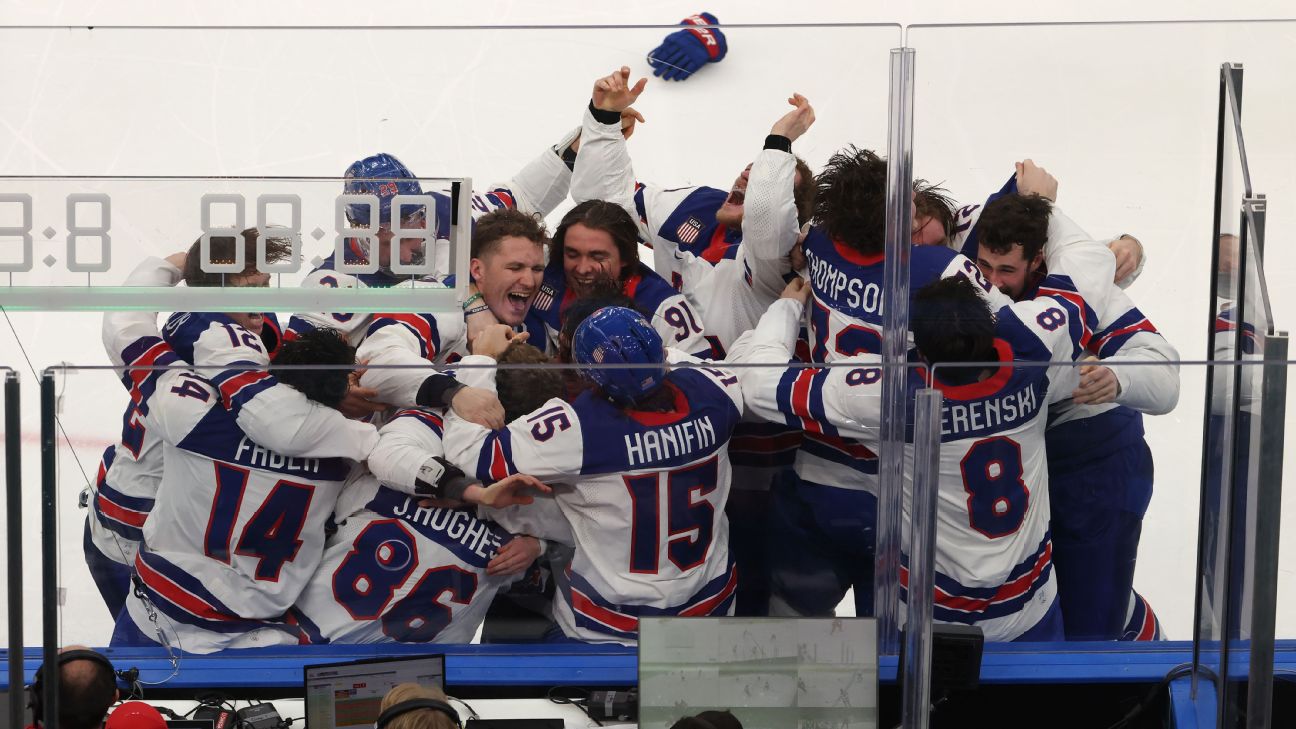
For the first time since the famed “Miracle on Ice” in 1980, the United States men’s ice hockey team has captured Olympic gold, and the achievement has drawn widespread praise from across the sports landscape.
The victory ends a decades-long pursuit of another top podium finish for the U.S. men and instantly invites comparisons to the legendary 1980 squad that stunned the Soviet Union in Lake Placid and went on to win gold. While the eras, opponents and circumstances are different, the sense of national pride and excitement surrounding this latest team’s accomplishment is unmistakable.
Prominent athletes from other major sports quickly joined fans in recognizing the significance of the moment. NFL icon Tom Brady, widely regarded as one of the most accomplished players in football history, publicly applauded the team’s performance, acknowledging both the pressure and the sense of history that accompanied this Olympic run. His message underscored how this gold medal resonates beyond hockey, touching competitors who understand what it means to deliver in the world’s biggest events.
In the NBA, star guard Devin Booker also highlighted the magnitude of the result, celebrating the team’s resilience and the symbolic end to a long wait since 1980. His reaction reflected how Olympic success can galvanize athletes and supporters across different sports, uniting them around a shared national moment.
Reaction poured in from current and former hockey players as well, many of whom pointed to the evolution of American hockey over the past four-plus decades. They cited improvements in youth development, the growth of the sport nationwide and the increasing number of U.S. players making an impact at the professional level as factors that helped lay the groundwork for this gold-medal breakthrough.
Fans and analysts also drew on the historical context, noting that every American men’s team since 1980 had skated under the long shadow of that Miracle on Ice group. This year’s team faced its own unique challenges and expectations, yet managed to carve out a distinct place in hockey history. Rather than trying to replicate 1980, they created a new landmark moment that can stand on its own.
Across social media and traditional outlets, the tone was a blend of nostalgia and fresh celebration. Many recalled where they were when they first heard about the 1980 win, then connected that memory to this latest triumph. Others focused on what this could mean for the next generation of American players, hoping that a new wave of children will be inspired to pick up skates and sticks after watching the team stand atop the podium.
The gold medal also reinforces the United States’ place in the global hockey conversation, signaling that the program can again reach the highest level on the sport’s most visible stage. From household names such as Brady and Booker to lifelong hockey devotees, the message was consistent: this is a milestone that will be remembered for years to come, a modern counterpart to one of the most storied chapters in American sports history.
While each Olympic cycle brings its own narrative, this U.S. men’s team has now authored one of the defining moments of these Games. Their gold medal not only closes a 46-year gap, it adds a new chapter to a legacy that continues to shape how American hockey is viewed at home and abroad. The broader sports community’s reaction reflects just how powerful and far-reaching that achievement is.